The river
Birrarung: the Yarra's story
How the Yarra came to have two names, who has gathered on its banks for thousands of years, how Melbourne grew around it and how a 2017 law now protects it.
Book the Yarra dinner cruise ↗Quick answer
The Yarra River is Birrarung to the Wurundjeri, a word meaning river of mists. The name Yarra comes from a misunderstanding recorded in 1835, the year Melbourne was founded on the river's lower banks. It is nicknamed the upside down river for its golden-brown colour, and a 2017 Victorian law now treats it as one living, integrated natural entity. A dinner cruise sails the central reach.
Two names for one river
The Wurundjeri call the river Birrarung, from a word meaning river of mists. The name Yarra arrived in 1835, when the surveyor John Helder Wedge visited the area with two Kulin people. They pointed at the flowing water and said yarra yarra, and Wedge recorded it in his notebook in the mistaken belief that it was the name of the river. It was the Kulin name for a waterfall on the river, which was later dynamited in 1883 during harbour improvements. Wedge learned of the mistake, but by then the name had stuck. Both names are still in use today.
The people of the river
The Wurundjeri and the Boonwurrung are the traditional owners of the Yarra River Valley, which covers much of the present site of Melbourne, called Naarm in their language. The river has been a major food source and meeting place for Indigenous Australians for thousands of years, and Federation Square's own site describes its land as a meeting place for thousands of years, near Birrarung. After European settlement, land clearing forced the remaining Wurundjeri away from the river. Their connection to it continues, and the river's current protection law gives them a formal voice.
A city founded on the river
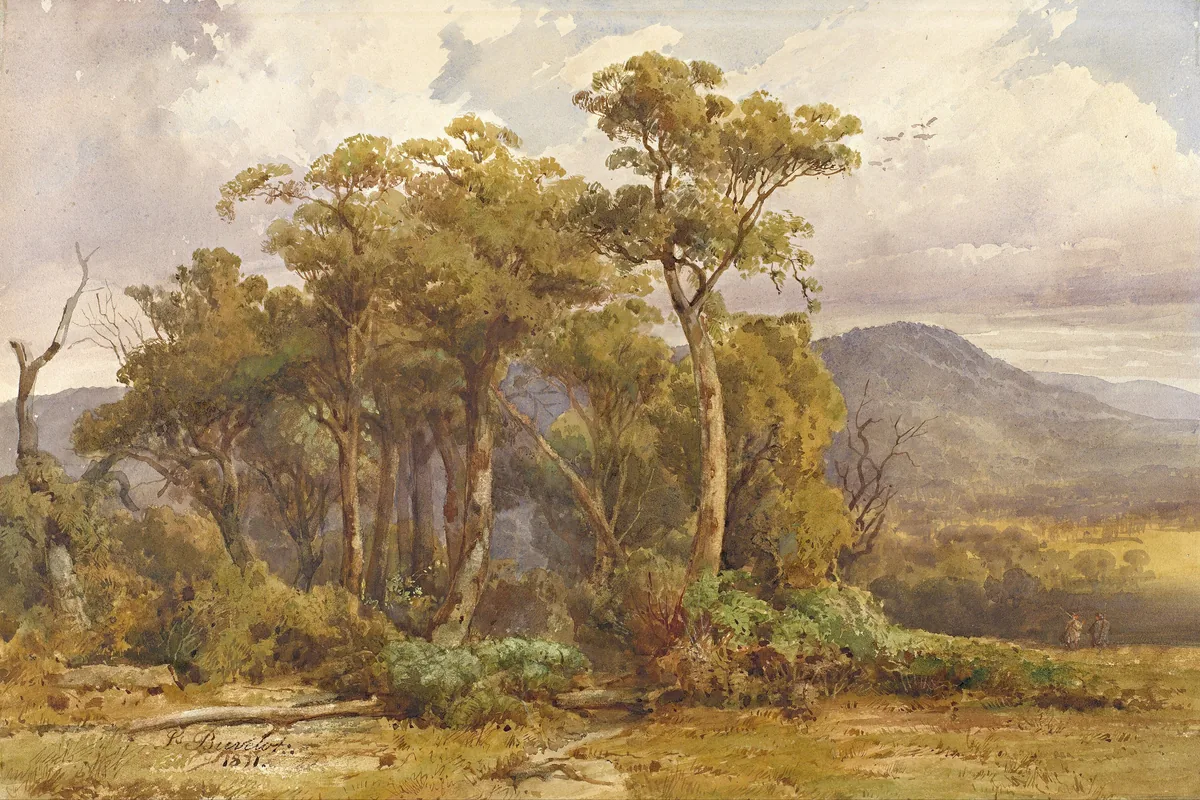
Melbourne was established in 1835 along the lower banks of the Yarra. The settlement's main port sat just downstream of the falls, west of modern-day Queens Bridge, where saltwater met freshwater, and the river was preferred to the other port because it gave direct access to the town's main streets. Early industries grew along the banks and degraded the water. The present Princes Bridge opened in 1888 and still carries the city's traffic across the river. Seen from a boat in the evening, the river is the thread that explains why the city sits where it does.
Why the water is brown
People call the Yarra the upside down river because of its golden hue, with the muddy brown colour coming from easily eroded clay soils in its catchment. The water was clear when Europeans first settled, but intensive land clearing since the mid-19th century has put microscopic clay particles into it, and turbulence keeps them suspended in parts of the middle and lower river. When the river meets the marine salts of Port Phillip the particles clump together and sink. The clay is not a major part of the river's pollution, so the colour is a feature of the water and not a warning sign.
Turning back to the river
For a long time the city turned its back on the Yarra. In the 1980s a give the Yarra a go campaign set out to make the south bank a more useful part of the city, and the first projects were a footbridge, now the Evan Walker Footbridge, and the Southbank Promenade, which opened in 1990. Federation Square followed on the north bank, opening in 2002, and a neighbouring park, Birrarung Marr, was built along the bank at the same time. Docklands renewal began in 2000. Today the riverbanks are among the most used places in Melbourne, which is what a night cruise shows.
The river today
Today the mouth of the Yarra, including Swanson and Appleton docks, is used for container shipping by the Port of Melbourne, which is the busiest port on the continent. The city reach is inaccessible to larger watercraft, and it has seen increased use for transport and for recreational boating, including kayaking, canoeing, rowing and swimming. Melbourne Water leads the Yarra Strategic Plan 2022 to 2032, which sets out a long-term vision for the river and its lands. A dinner cruise sails the central reach between those two worlds, the working port downstream and the parks upstream.
Protecting the river
In 2017 the Victorian Parliament passed the Yarra River Protection Act, whose Woi-wurrung title, Wilip-gin Birrarung murron, translates roughly as keep the Yarra alive. The Act treats the Yarra as one integrated living natural entity to be protected. Six Wurundjeri elders gave speeches in Parliament in English and Woi-wurrung, and the Birrarung Council it created must have at least two traditional owner representatives. The river's environmental health remains at risk from litter, pollution and development, as a report in 2019 noted, so the law is a beginning and not an ending.
Frequently asked questions
What does Birrarung mean?
River of mists, in the Wurundjeri language. It is the river's original name, and Birrarung Marr, the park beside it, means beside the river.
Why is the Yarra brown?
Clay particles from eroded catchment soils stay suspended in the water, which gives it the golden-brown colour behind the upside down river nickname.
Who are the river's traditional owners?
The Wurundjeri and the Boonwurrung peoples, of the Kulin nation, are the traditional owners of the Yarra River Valley.
Sources